Choosing where to live in Tel Aviv is about much more than picking a neighborhood. Compare Tel Aviv and Ramat Gan by lifestyle, budget, commute and everyday comfort.
Choosing where to live in Tel Aviv is not simply about choosing an address. It means choosing a lifestyle, a monthly budget and, very concretely, the way your time in the city will unfold — whether you are coming to discover Tel Aviv, work here or settle down for longer.
Most guides rank neighborhoods by popularity. Ours looks at what they actually change in your day-to-day life: noise levels, commuting time, rent, housing quality and how easy it is to settle in when you do not yet have a local network.
First, understand the real geography of Tel Aviv
One of the most common mistakes is to limit your search to Tel Aviv itself.
The wider metropolitan area, known as Gush Dan, functions almost like one continuous city. Ramat Gan, Givatayim and Bnei Brak can be fifteen or twenty minutes from central Tel Aviv — sometimes closer than traveling between the south and north of Tel Aviv during rush hour.
In practical terms, expanding your search radius by just a few kilometers can significantly reduce your rent without necessarily changing your social or professional life.
That is the first trade-off worth considering, even before you start browsing listings.
Tel Aviv neighborhoods, one by one
Central Tel Aviv | Rothschild, Dizengoff and Lev Ha'Ir
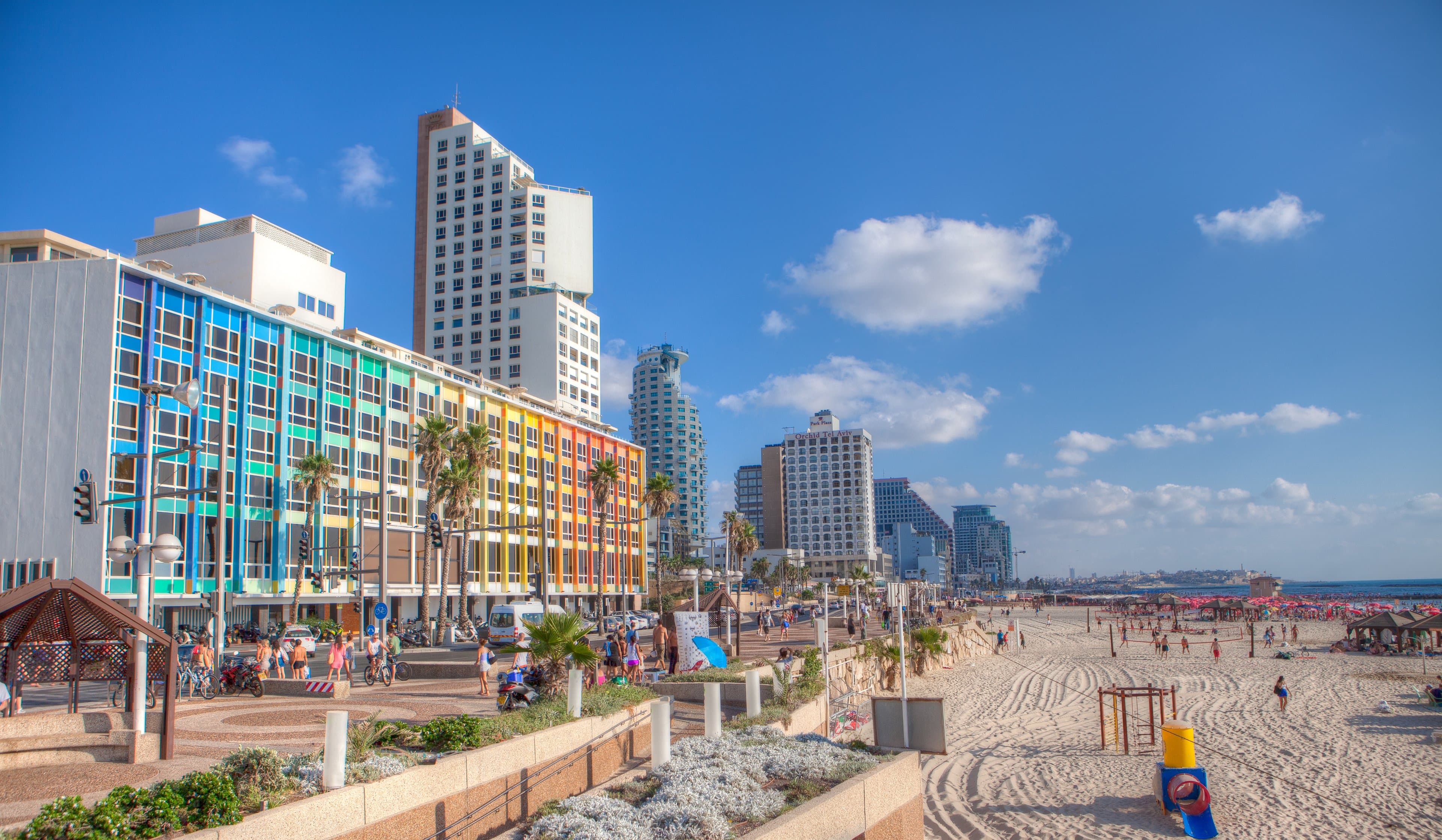
This is the beating heart of Tel Aviv. Cafés, offices, restaurants and nightlife are all within walking distance.
It is also one of the most expensive and noisiest parts of the city. Many buildings are older, often without elevators, and sound insulation can be limited.
Best for: younger, highly social residents who go out often and are willing to pay a premium for location.
Good to know: a “renovated” apartment near Rothschild may still be in a building dating back to the 1950s. Always check the air conditioning, electrical system and the apartment's exposure before signing.
Old North | Ben Yehuda, HaYarkon and Basel
Quieter and more residential, while still being close to both the beach and Yarkon Park.
The area attracts families and people who are more settled in the city. Prices remain high, but the atmosphere is noticeably calmer than in central Tel Aviv.
Best for: people who want easy access to the sea and the park without the constant noise of the city center.
Florentin and South Tel Aviv
Florentin is Tel Aviv's creative quarter: street art, workshops, bars and a distinctive urban energy.
Rents have risen significantly in recent years as the area has evolved, although they generally remain below central Tel Aviv levels.
Best for: creatives, freelancers and people looking for atmosphere and character rather than polished comfort.
Good to know: building quality varies considerably from one street to another. This is definitely an area where you should visit the exact property before signing anything.
Neve Tzedek
One of Tel Aviv's most charming neighborhoods, with narrow streets, low-rise houses, independent boutiques and an almost village-like atmosphere.
It is also one of the most expensive areas per square meter, and available apartments can be difficult to find.
Best for: people who prioritize atmosphere and location over space and have a comfortable housing budget.
North Tel Aviv | Bavli, Tzahala and Ramat Aviv
Residential, green, family-oriented and removed from much of the city's bustle.
Bavli, located between Yarkon Park and the Ayalon highway, has become particularly attractive to people looking for a quieter lifestyle without leaving Tel Aviv.
Best for: families, established professionals and people working from home who value peace and quiet.
Jaffa
Historic, diverse and constantly evolving.
There are major price differences between renovated properties near the waterfront and apartments further inland, which means the exact street matters enormously.
Best for: people looking for character and potentially better value for money, provided they take the time to understand the immediate neighborhood.
Ramat Gan: the alternative more people should consider earlier
Ramat Gan is one of the most rational answers to Tel Aviv's housing equation.
It often offers larger, newer homes at more accessible prices, while remaining only minutes away from Tel Aviv's business districts and city center.
What changes in practical terms?
- Buildings are often newer, with better insulation and more modern amenities.
- You can generally get more space for the same monthly budget.
- There is direct access to the Diamond District and several of the metropolitan area's main employment hubs.
- Residential areas are greener and quieter, from Bavli on the Tel Aviv side to Marom Naveh and the National Park area in Ramat Gan.
- Daily life feels more local and significantly less tourist-oriented.
These are precisely the reasons why we chose Ramat Gan for Hazetim House.
It offers a genuinely lived-in neighborhood, immediate access to everything that makes Tel Aviv attractive and a calmer everyday environment — without paying the full premium that comes with living in the center of the city.
Choose according to your lifestyle, not the map
You are coming to work remotely for three to six months.
Your main concern should not only be the neighborhood. It should be the quality of your workspace and how quickly you can meet people. A poorly equipped apartment in the perfect neighborhood can make everyday life unnecessarily difficult.
You are making Aliyah or planning a long-term move.
A flexible base during your first few months is often the smarter option. Signing a one-year lease in a neighborhood you only know from the internet can become an expensive mistake.
You are moving as a couple or family.
North Tel Aviv and Ramat Gan are among the most balanced options when it comes to space, quiet surroundings, schools and green areas.
You are coming for a short professional assignment.
Prioritize proximity to your workplace. Commuting times across Gush Dan are often underestimated by people who do not yet know the city.
What most neighborhood guides won't tell you
Your neighborhood shapes your surroundings. It does not define your experience.
You can spend six months in one of Tel Aviv's most beautiful neighborhoods and leave without having really met anyone or understood the city — while spending your evenings dealing with water heaters, electricity bills and apartment maintenance.
What makes the difference is something else: how quickly you feel at home, the people you meet in your everyday life and whether you discover Tel Aviv from the inside, as someone who lives here rather than someone simply passing through.
That is the belief behind our approach at WeStays Living.
Housing is not simply a real estate product. It is the setting for everyday life. It should work from day one, feel genuinely connected to its neighborhood and give residents access to a community they can engage with at their own pace.
Frequently Asked Questions
What is the cheapest area to live in Tel Aviv?
South and east Tel Aviv generally offer some of the city's more affordable rents, although housing quality and the overall feel of individual streets can vary considerably.
Ramat Gan can offer a better balance between price, housing quality and everyday convenience than some of Tel Aviv's more peripheral neighborhoods.
Do you need to live in Tel Aviv itself to enjoy the city?
No.
From Ramat Gan or Givatayim, central Tel Aviv can be reached relatively quickly, while housing costs can be noticeably lower.
Living just outside Tel Aviv itself does not necessarily mean giving up the Tel Aviv lifestyle.
How long does it take to find an apartment in Tel Aviv?
If you are starting from scratch without a local network or Israeli paperwork, finding the right apartment can take several weeks of active searching.
That is one reason many newcomers choose furnished, flexible accommodation for their first few months.
Which neighborhoods are best for remote workers in Tel Aviv?
Look for areas that combine quiet surroundings, reliable high-speed internet and easy access to cafés or coworking spaces.
North Tel Aviv, Bavli and residential neighborhoods in Ramat Gan can all work particularly well for remote professionals.
Discover Hazetim House
Hazetim House, our home in Ramat Gan, welcomes residents for stays starting from three months, with premium private spaces, ergonomic work areas, services included and a carefully curated community.